Starting out and up: NUS graduates launch entrepreneurial ventures in precision farming, wearable tech and scent-based marketing
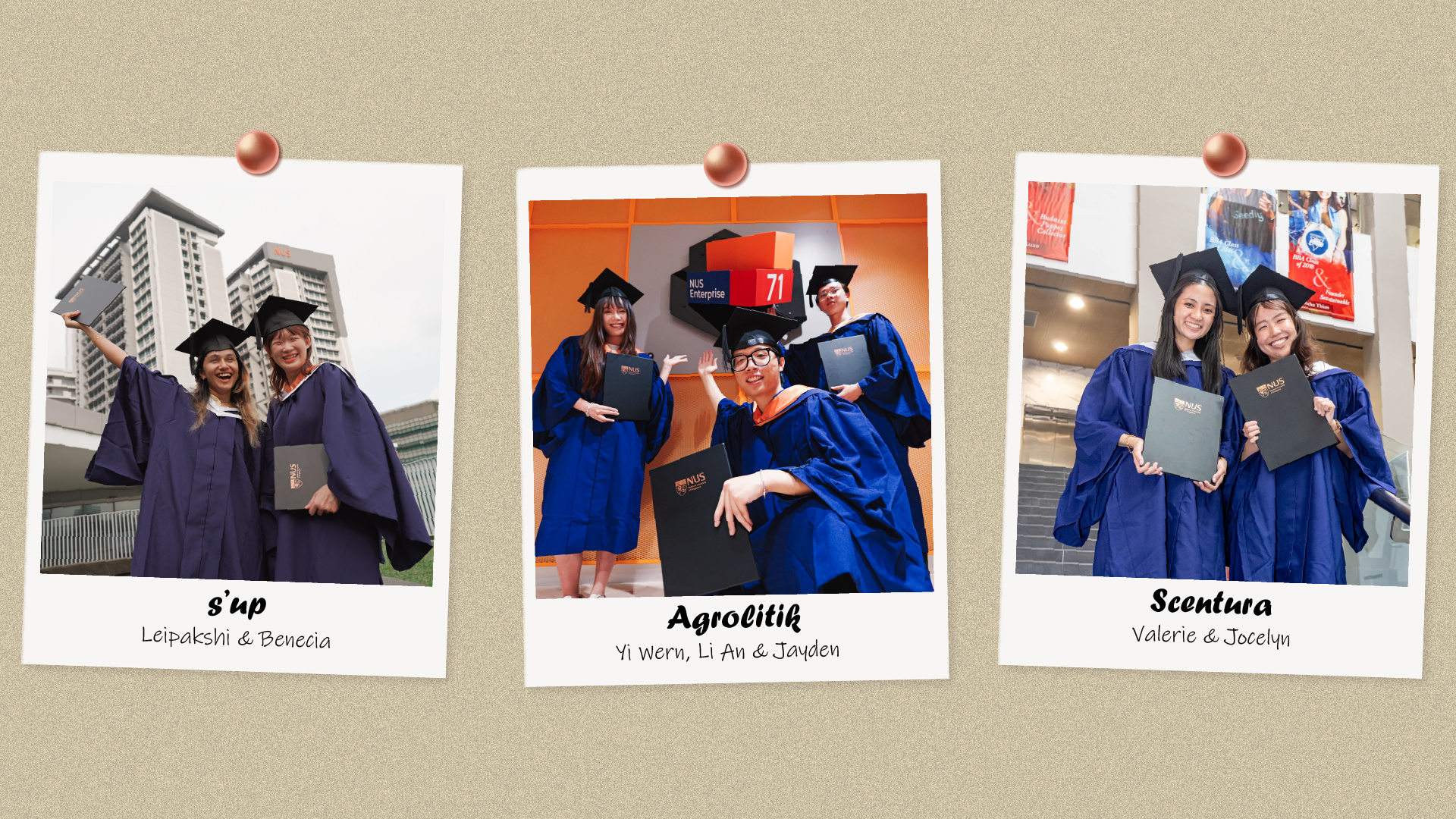
Behind every start-up founder is a village — and for these seven graduates at this year’s Commencement, that village was NUS. From global exposure through NUS Overseas Colleges (NOC) to friendships forged at NUS eNterprise House (N-House) and BLOCK71, entrepreneurs from the NUS Class of 2026 tapped into a strong support network to grow their ventures before they even graduated.
Farming data for the community
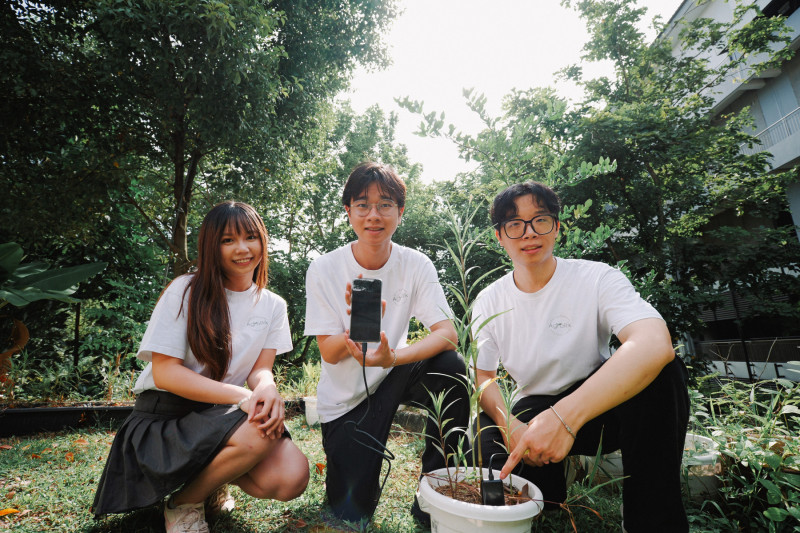
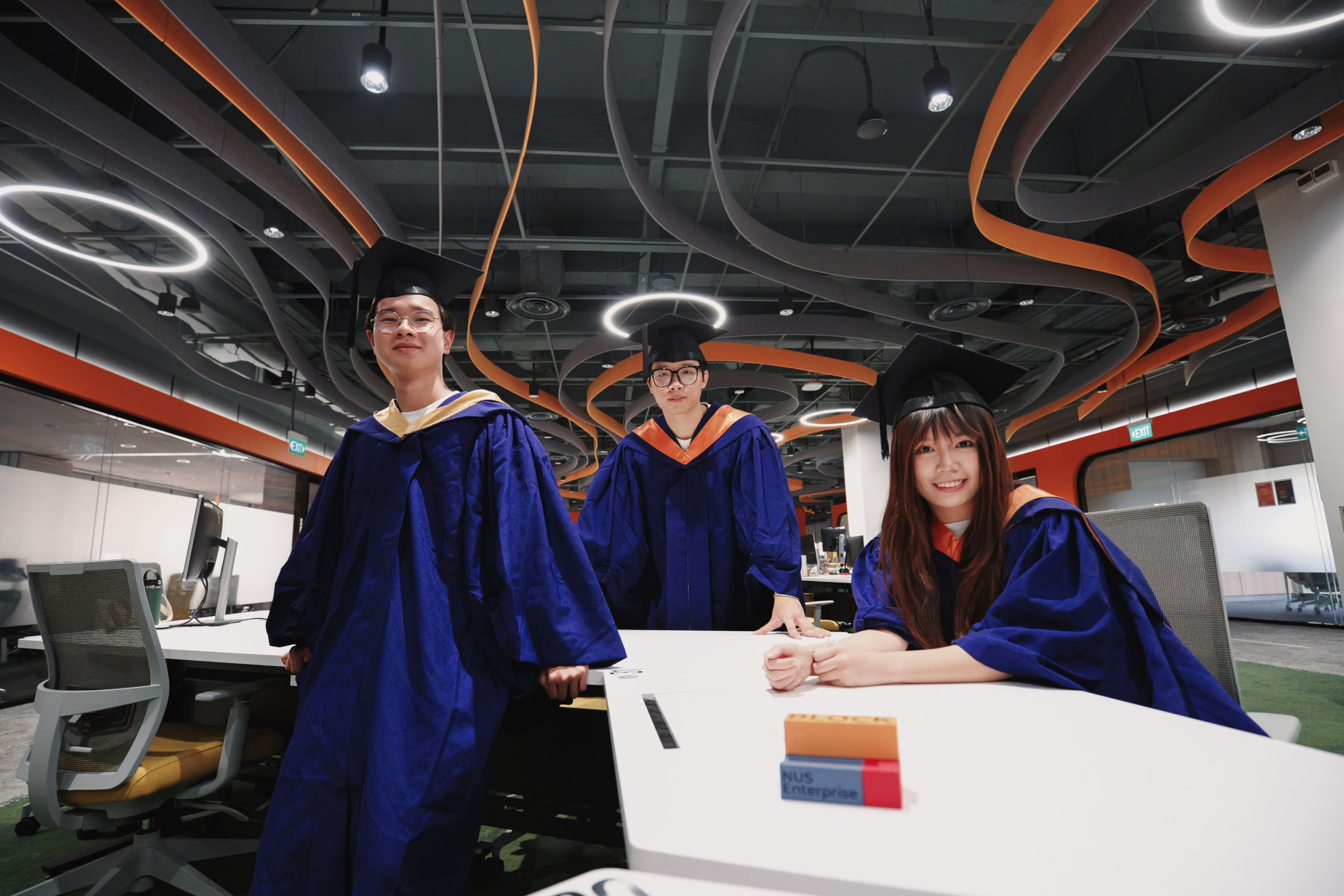
One of the first things that Agrolitik founders Jayden Tan, Tsui Yi Wern, and Yong Li An did when they moved into THE HANGAR, a launchpad for early-stage start-ups by NUS Enterprise, was to plant a small garden.
They were testing Agrolitik’s precision farming tool, which would help fix common problems that Southeast Asian farmers face — insufficient knowledge on soil conditions leading to wastage from over-fertilising and over-watering, and inconsistent soil quality.
Agrolitik supports smallholder farmers through automation. Through its efforts, the start-up advances four of the United Nations’ 17 Sustainable Development Goals: No Poverty, Zero Hunger, Decent Work and Economic Growth, and Climate Action.
Once its sensor is stuck into the soil, Agrolitik’s mobile app gives farmers insights into soil moisture, temperature, pH and NPK (Nitrogen, Phosphorus, and Potassium) levels. Building the app took some work. Yi Wern, a Computer Science major from the School of Computing, created multiple iterations of the application for a smoother user experience. She also factored in the possibility that some farmers could not read, and simplified both the language and user flow of the application.
Being incubated at THE HANGAR proved a great help. Fellow start-up founders became their first testers, providing feedback on app functionality and identifying bugs and glitches. But more than that, the spirit of entrepreneurship drove them to continuously improve their product and business model.
“They are deeply aspirational in building everything from nothing. There's a mutual accountability that forms around us,” said Jayden, referring to fellow start-up founders at BLOCK71.
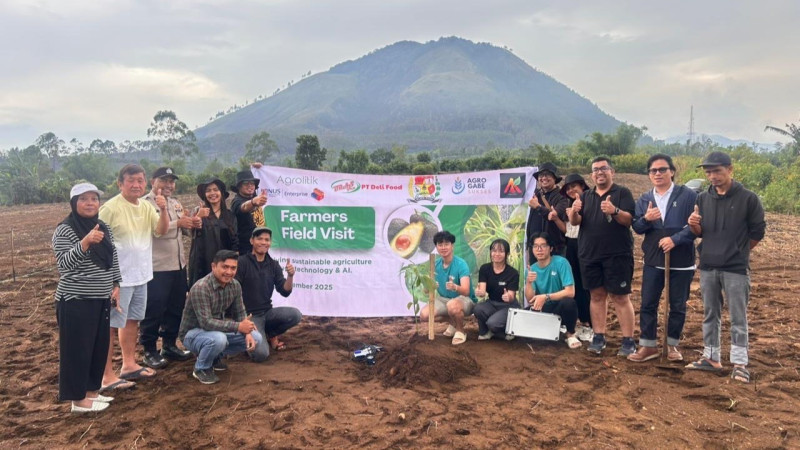
Since Agrolitik’s start in November 2024, the trio have rolled out their product in Indonesia, and now sees over 40 users in more than 10 farms using their sensors and app.
In a trip to Medan in 2025, organised by Jayden, a Data Science and Analytics major at the College of Humanities and Sciences, the team conducted a field validation, the first on a farm after many tests in the garden. The feedback from farmers was positive. Most of the equipment on their farms were analogue, and they were intrigued by how the smart equipment could tell them about soil conditions.
Agrolitik was selected for the highly competitive Climate Catalysts Programme, an initiative by the United Nations Development Programme and Microsoft to empower youth-led ventures. The programme advances scalable innovations in clean air, food security, renewable energy, circular economy, and water to foster resilient communities across the Asia-Pacific.
Agrolitik’s expansion plans to Malaysia, Thailand and Vietnam are on track. Following applications by Li An, a Computer Science major, to leading start-up programmes, Agrolitik has not only secured its spot at THE HANGAR but is now part of NUS Enterprise’s Venture Initiation Programme (Impact Track), which provides funding of up to S$10,000.
Solving pain points
For College of Design and Engineering student Leipakshi Gupta, pain kick-started her start-up journey. She had experienced back pain after sitting all day during her internship. Her doctor told her to “sit better and be more aware”. But the question was, how?
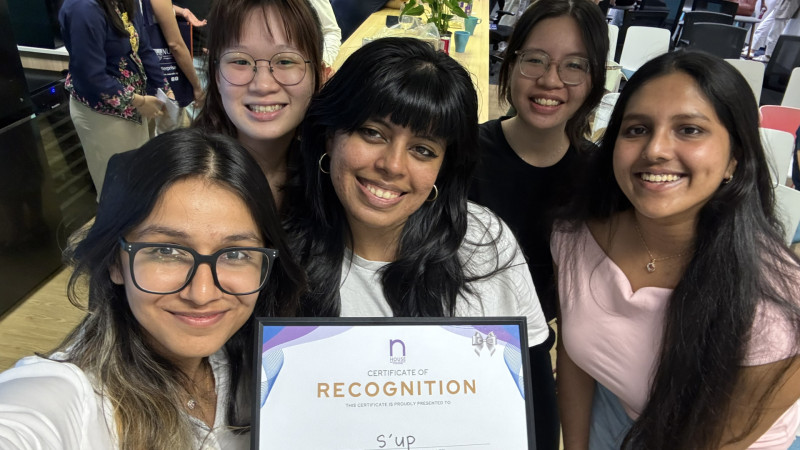
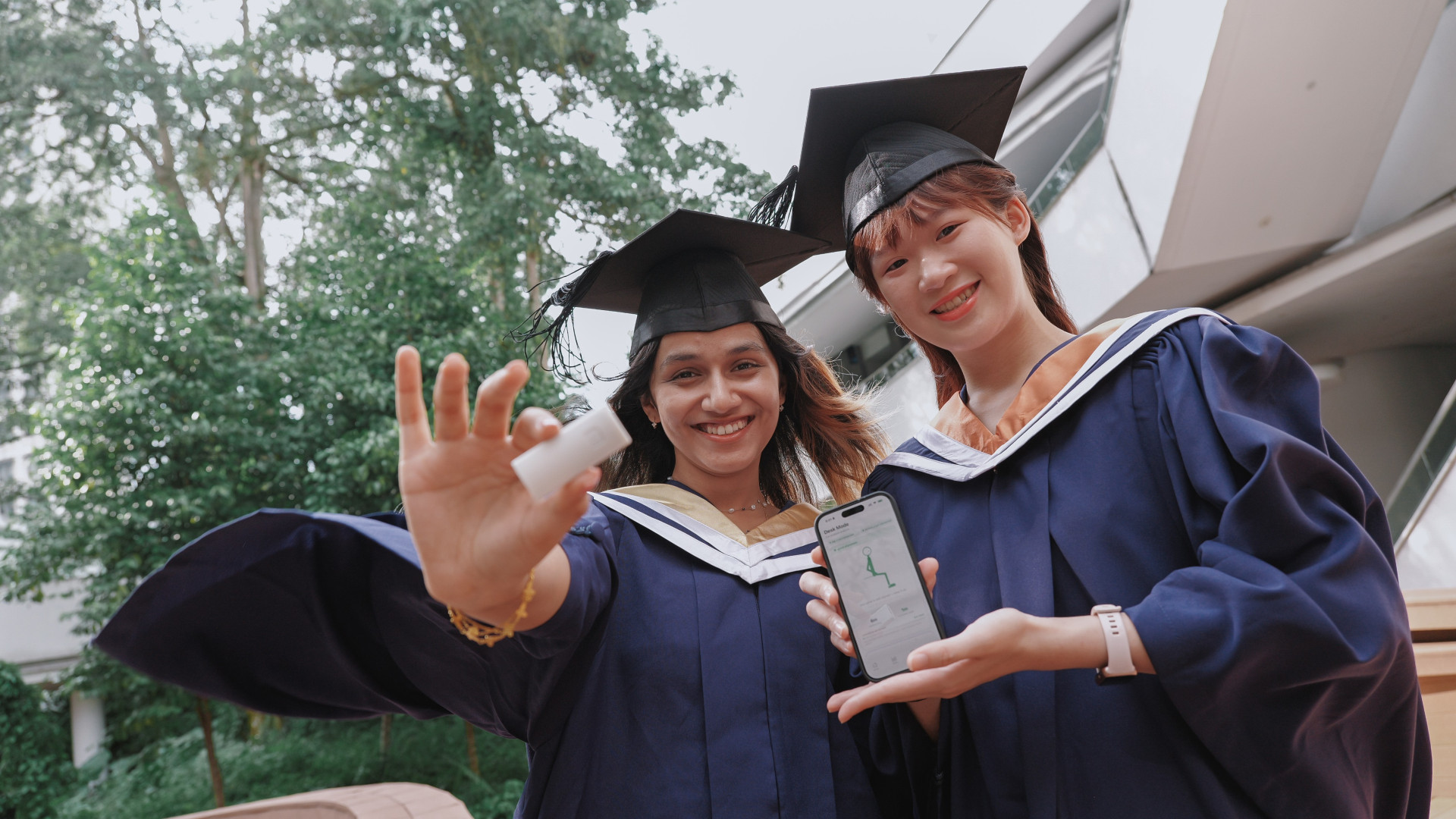
Together with co-founders Benecia Tang and NUS alumna Pragya Jha (Computing ‛25), she set out to build posture care start-up s’up in September 2025. Through wearable sensors attached with adhesive patches, the s’up’s app could provide actionable insights on spinal alignment throughout the day. These remind users about their posture while at the desk, whether they are hunched or twisting their spine while seated.
Leipakshi drew on her Electrical Engineering background to apply sensors for alignment tracking, while Benecia contributed market research experience from her Business Analytics modules in the School of Computing (SoC). She also applied her knowledge from launching a previous start-up and an NOC module on ideation.
But it was at the N-House residence that s’up really came together. There, they were kept accountable with N-house’s boot camp, which consisted of weekly check-ins with resident mentors and monthly pitch nights.
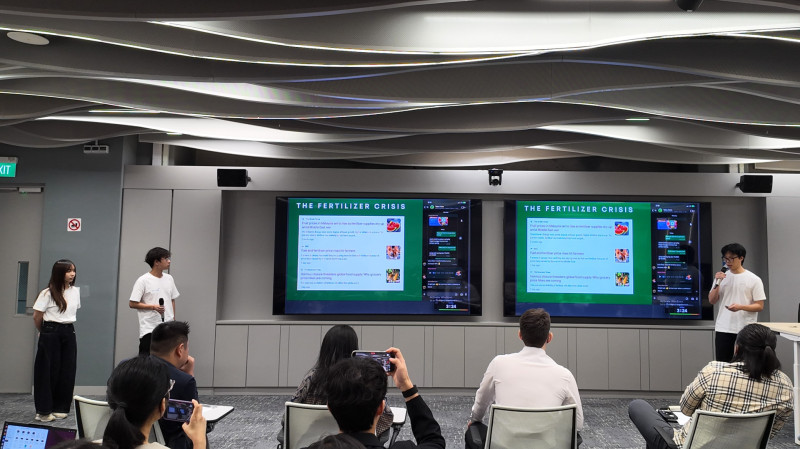
After presenting at Demo Day, where students showcase their start-ups and receive feedback, they refined their proposal for Pitch Night, which dangled a top funding prize of S$5,000.
Benecia and Leipakshi won second place and got a first taste of pitching s’up live. Building it from there was a learning journey in itself.
“In the beginning, I was very product-focused. I even thought of building a circuit myself,” said Leipakshi. But Benecia convinced her to get the prototype out fast.
“It's about getting validation before you have a very sophisticated, over-engineered product,” Leipakshi explained. Benecia talked to different stakeholders for ideas on how they could rapidly prototype “instead of wasting time on the nitty-gritty”.
They leaned on each other. Leipakshi was full of ideas, while Benecia was the voice of reason and kept them grounded. In 2026, they received the Venture Initiation Programme @ SoC grant, and will use the S$10,000 to move on to prototyping, user testing, product development, and manufacturing.
Currently they are working on automation to incorporate features like real-time form correction during workouts and reminders while users work. Its beta version was released in June 2026, with over 200 people on their waitlist who can provide feedback.
The founders are also speaking to physicians and doctors for insights. Their ultimate aim is to develop a medtech solution for those with chronic back pain. To kickstart this, s’up is working with the National University Hospital on a study timeline.
A nose for business
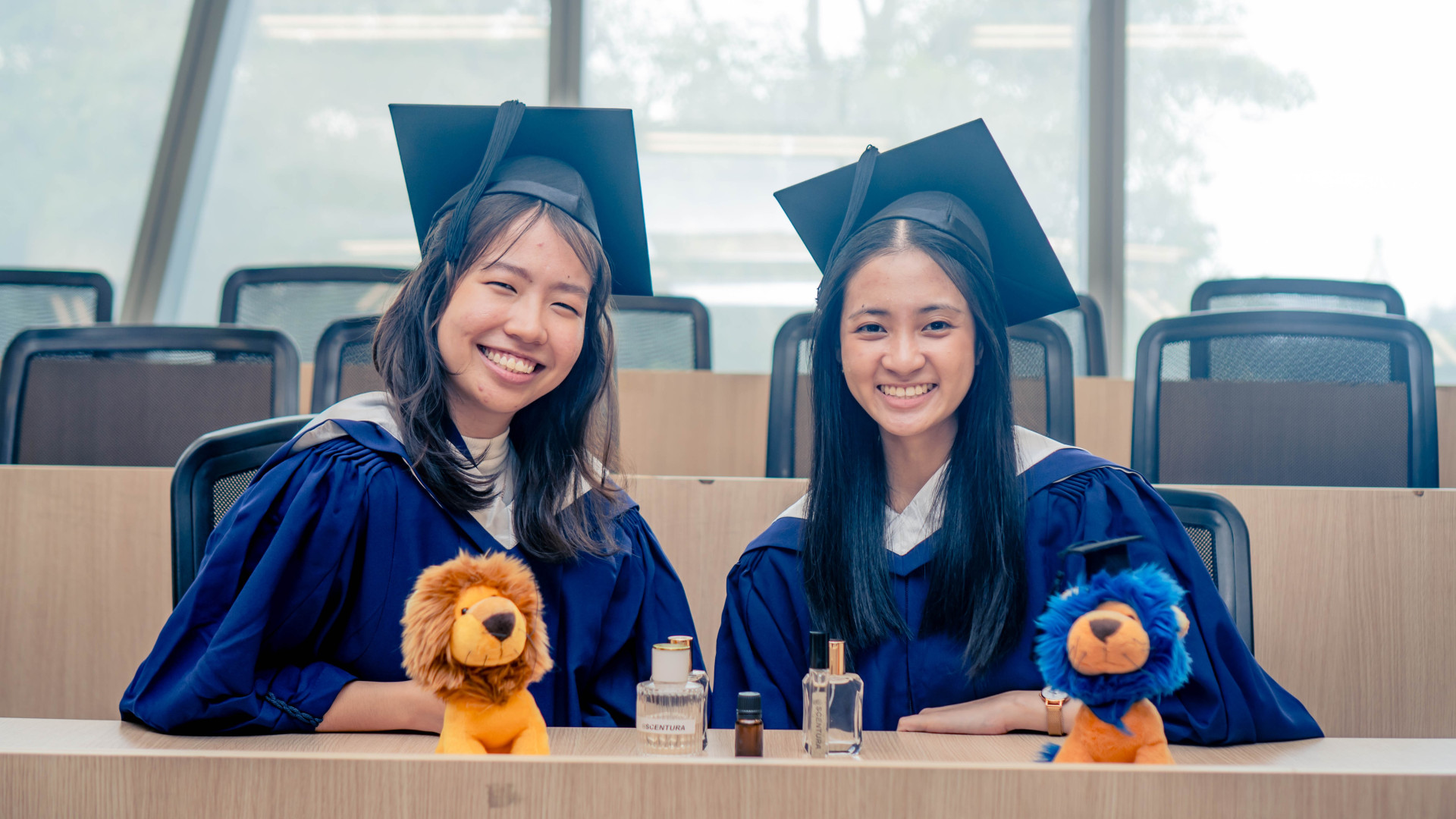
To launch her scent-based marketing business, Jocelyn Lim first had to keep her nose to the grindstone. Over a few months, she sent out over 80 personalised emails to pitch Scentura, a start-up she co-founded with fellow NUS Business School student Valerie Wong in August 2025.
Scentura aims to use food scents to help cold food businesses — which lack the natural, appetising smells of hot meals — strengthen brand identity and attract customers. Examples include caramel scents for pastry cafés and brownie scents for chocolate shops.
The idea first came to Valerie during her NOC programme in Shenzhen, where she found that many tea shops had distinct scents, creating memorable customer experiences. Jocelyn, who was attending an NOC programme in Toronto, found while working in a start-up there that it was invigorating — she wanted to be part of this culture where her impact was so visible.
When the pair met in N-House, Scentura took shape. They began preparing for Pitch Night with help from advisors and seniors. Fellow competitors chipped in too, helping with pitch practices where the pair showcased a coffee scent for a café. Fellow N-Housers even helped with brewing coffee to create the scent — a true display of camaraderie from N-House’s start-up community.
Valerie tapped the skills from her Business Analytics and Management & Organisation programme to prove that Scentura had a place in the market based on market analysis and data on the efficacy of scent marketing. Meanwhile, presenting and pitching came naturally to Jocelyn, who had often done both in her Marketing classes.
“Jocelyn speaks to the client — she’s like the heart of the business,” said Valerie. “And Valerie is the head,” Jocelyn added. “She's the logical side, thinking about and gathering data so our clients can trust us. That’s why I’m the heart; I get them excited!”
As part of the N-House experience, the pair could also consult resident mentors, attend founder talks for inspiration, and seek advice on problems they were facing. From these sessions, Jocelyn learnt that sales calls were not just pitches, but opportunities to refine Scentura to better suit clients’ needs.
The two have decided to go all in for the next few months after graduating. While they have moved out of N-House, they remain connected to its community through alumni events. They are now working on research and development for their first pilot with an ice cream shop.
This story is part of NUS News’ coverage of Commencement 2026, which celebrates the achievements of our graduates from the Class of 2026. For more on Commencement, read our stories and graduate profiles, check out the official Commencement website, or look up and tag #NUS2026 on our social media channels!