No one path or timeline, but the courage to pursue a passion and fulfil a dream
As NUS celebrates Commencement 2026, two graduates from NUS Nursing and the Lee Kuan Yew School of Public Policy show how a desire to serve can open new paths at any stage of life. One left behind the corporate boardroom after a 25-year career, while the other’s journey into international affairs was inspired by the 2004 tsunami.
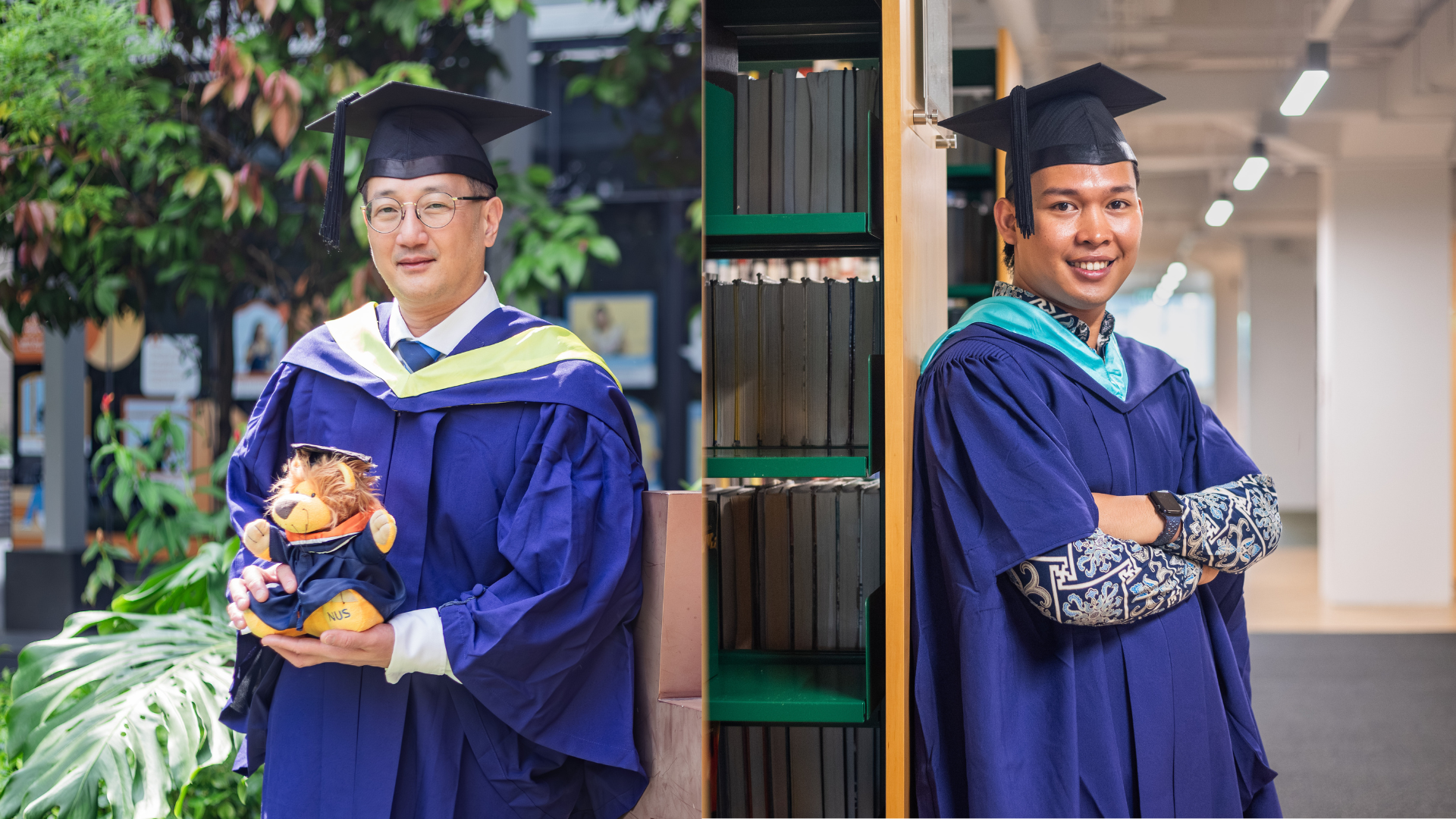
Whether it’s overcoming the age barrier or going the distance, these two graduates show how their thirst for learning can never be quenched. More than that, their NUS experience has also ignited their passion to give back.
Brian Ang: From numbers to nursing
By age 14, Brian Ang was determined to become a doctor, drawn by his interest in biology. But when he did not qualify for the triple science stream in secondary school, a key requirement to study medicine in university at that time, he had to rethink his path ahead.
He eventually chose to pursue actuarial studies at the Australian National University on a scholarship from the institution, building a successful career in a very different field.
Over 25 years in the insurance sector, Brian rose through the ranks to become Chief Actuary for Asia-Pacific in a multinational corporation based in Sydney, Australia, then moved to Hong Kong before eventually coming back to Singapore in 2012.
Yet, even though he enjoyed his role as an actuary, his passion for healthcare never quite went away.
With his 50s approaching and having reached what he felt was the pinnacle of his career, Brian began thinking seriously about whether he could still make that long-held passion for healthcare a part of his life.
He considered different pathways into the field, which included a postgraduate medical degree and a Bachelor of Science (Nursing) degree via the Career Conversion Programme for Registered Nurses (CCP-RN) at the NUS Alice Lee Centre for Nursing Studies (NUS Nursing), which would take two years to complete.
“I wanted to work closely with patients, support them through their care journey, and be part of the team delivering care on the ground,” he said. “The CCP-RN felt like the right path because it would allow me to make that transition sooner and contribute in a practical and meaningful way.”
With full support from his wife and two teenage sons, he enrolled in the two-year BSc (Nursing) programme at NUS Nursing in 2024. His sons were particularly excited that their father was in school again. “They think it's pretty cool for Dad to be a full-time student, like they are,” said Brian, now 51.
In the programme, what he found refreshing was learning together with people from different backgrounds, like fresh A-level graduates, nursing students from polytechnic, and also people who were his age.
“We actually blended in together, studying common subjects. That was by far the biggest highlight,” he said.
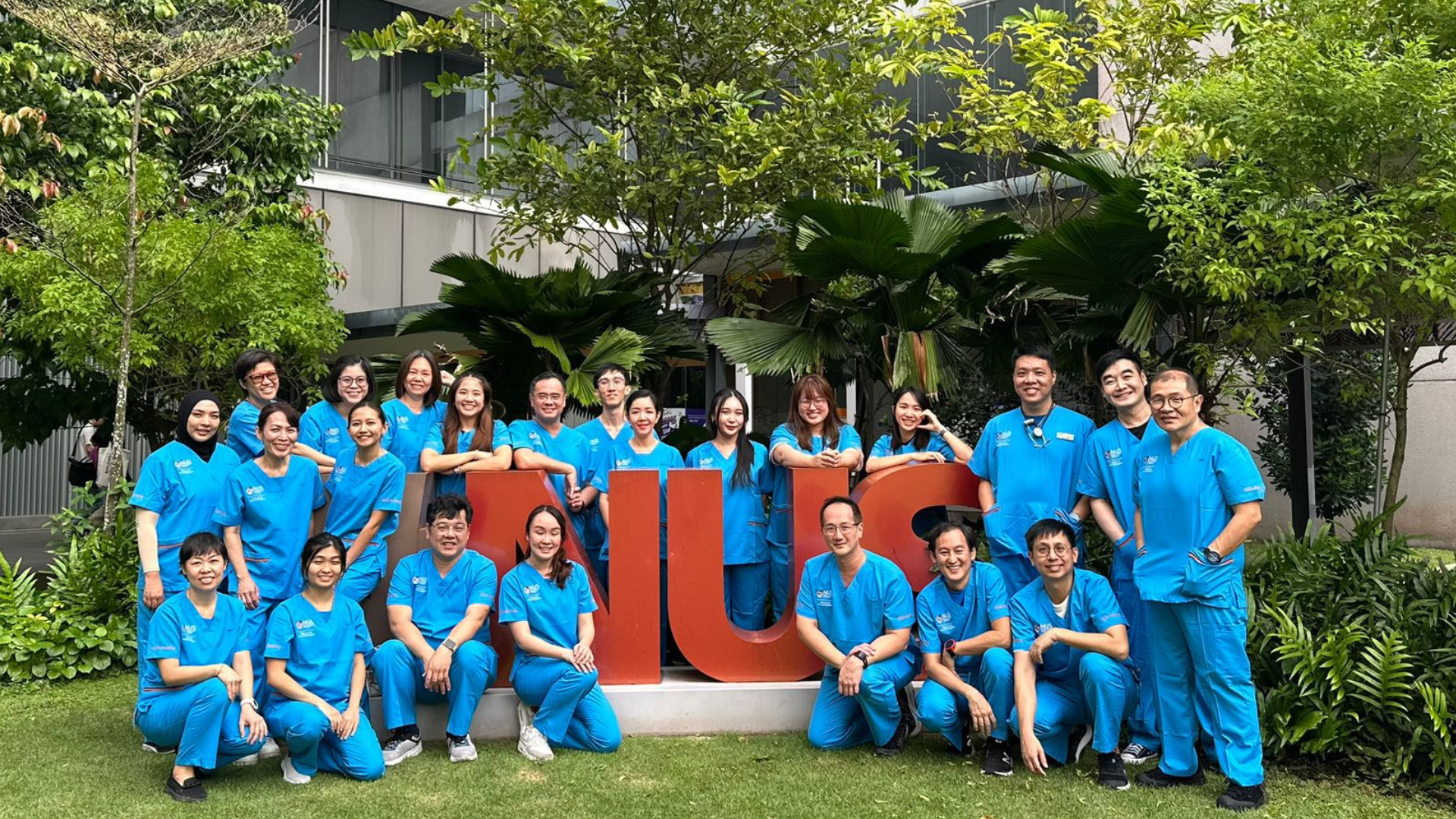
Brian admits to struggling at times to keep up with the use of technology in daily interactions and class assignments. “I had to quickly learn what a Tele-Bubble was as that was how my classmates were communicating with one another!” he quipped.
“I will do my work in PowerPoint, and then these digitally-savvy kids have to then translate it into Canva on my behalf,” he said with a chuckle. “But over time, I got used to working their way as well,” he added.
He appreciated the academic rigour of the biological side of nursing, but was pleasantly surprised to also learn about palliative care, public and community health, ethics, and professionalism.
“These modules provide nursing students with a holistic framework of healthcare beyond bedside duties, contextualising our roles within the systemic challenges of an ageing population,” he said.
Clinical attachments helped him narrow down his interests, and he now hopes to pursue clinical research nursing in the long term. In particular, he is interested in the role of a “clinical translator” — someone who helps turn research and lab discoveries into real-world treatments, tools or improvements in patient care.
After graduation, Brian will begin his two-year bond as a Staff Nurse at National University Hospital.
Returning to school has reinforced the value of lifelong learning for him. “To me, lifelong learning is ultimately about having the willingness to remain teachable at any stage of life,” he said. “We can take the valuable skills we’ve spent decades building and redirect them towards a service to society.”
Hafiz Maruf Akbar: From kampung boy to Master’s holder
When Hafiz Maruf Akbar’s hometown of Aceh was hit by one of the most devastating tsunami in history that killed over 170,000 in 2004, he was only four years old. Yet, the tragic destruction of his hometown remains seared in his mind.
Beyond rebuilding the flattened village, the global attention that followed piqued his interest in the world.
“As a child, I could not fully understand the scale of what had happened, but I remember seeing people from all over the world coming to Aceh to help us rebuild,” he said. “It made me realise that my small hometown was connected to something much bigger. I kept wondering: how does the world work, and how do people come together in times of crisis?”
The self-professed “kampung boy” lived in Aceh for the first 17 years of his life, finishing his high school education there, before moving to Jakarta to pursue a Bachelor in International Affairs on a scholarship at Universitas Islam Negeri Syarif Hidayatullah.
“We realised that the disparity in the quality of education between the rural areas and the capital was very huge,” he explained. “If I wanted to grow and expose myself to more opportunities, I knew I had to leave Aceh and continue my education elsewhere.”
His move to Jakarta also paved the way for his younger brother, who later joined him in the capital to attend high school on a scholarship. For the family, education became a way to look beyond the limits of what was available in Aceh.
For him, leaving home was part of merantau, an Indonesian word commonly used in Sumatra that captures the idea of venturing beyond one’s hometown in search of knowledge and success before eventually returning to the community to give back.
After graduation, Hafiz worked in Indonesia as a policy analyst in the private sector for one-and-a-half years. The role gave him a closer look at how policy decisions could shape lives and communities — but it also made him realise how much more he wanted to learn and deepen his understanding of international affairs, sharpen his policy skills.
This led him to enrol at the Lee Kuan Yew School of Public Policy (LKYSPP) at NUS in 2024 to pursue a Master in International Affairs on the Low Tuck Kwong Foundation Scholarship.
LKYSPP stood out to him for its strong focus on Southeast Asia, a region he had grown up in but wanted to understand more deeply.
“Coming from Indonesia, I wanted to study international affairs from a Southeast Asian perspective, not just through theories developed elsewhere,” he said. “Singapore is at the heart of the region, and LKYSPP gave me the chance to learn from professors and classmates who brought different experiences from across Asia and beyond.”
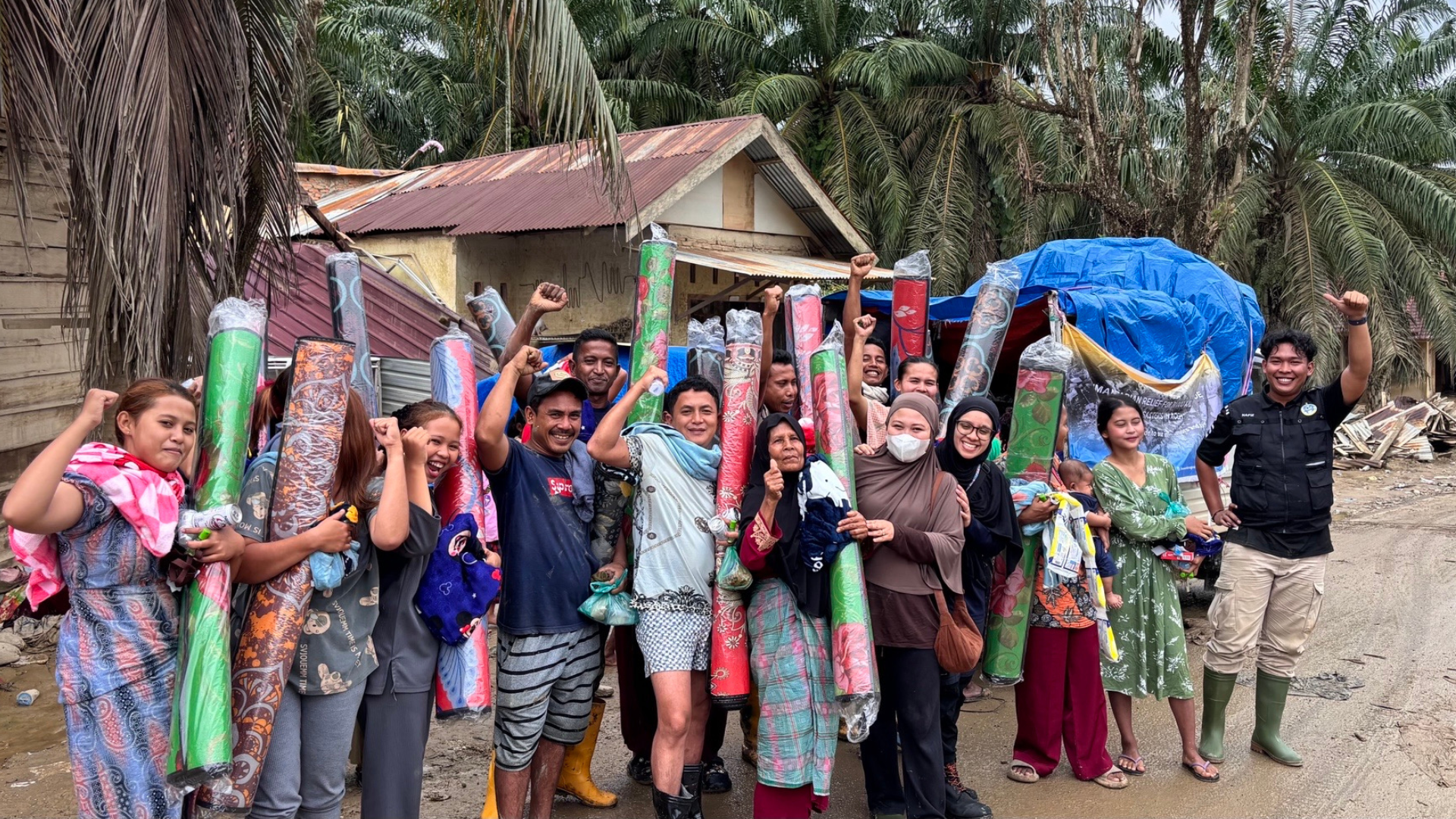
The skills he picked up proved useful when he returned to his hometown. When severe flooding struck Aceh in 2025, Hafiz was on the ground as a volunteer liaison, helping draft letters to the Indonesian government to allow the international community to enter and assist with relief efforts.
Outside of academics, he was heavily involved in the School’s football tournaments and was also Resident Assistant (RA) at College Green, the dedicated university housing for NUS postgraduate students.
One particularly unforgettable moment as an RA involved dealing with wildlife on campus. “Together with the relevant authorities, we successfully secured a baby cobra and also handled a monitor lizard situation,” said Hafiz with a laugh. “It certainly wasn't in the job description, but it's a story I'll never forget!”
With merantau in mind and his family’s support, he completed his Master’s Programme and was conferred the Dean’s Leadership Award at LKYSPP in 2026, an honour recognising his leadership contributions both within the School and the wider community.
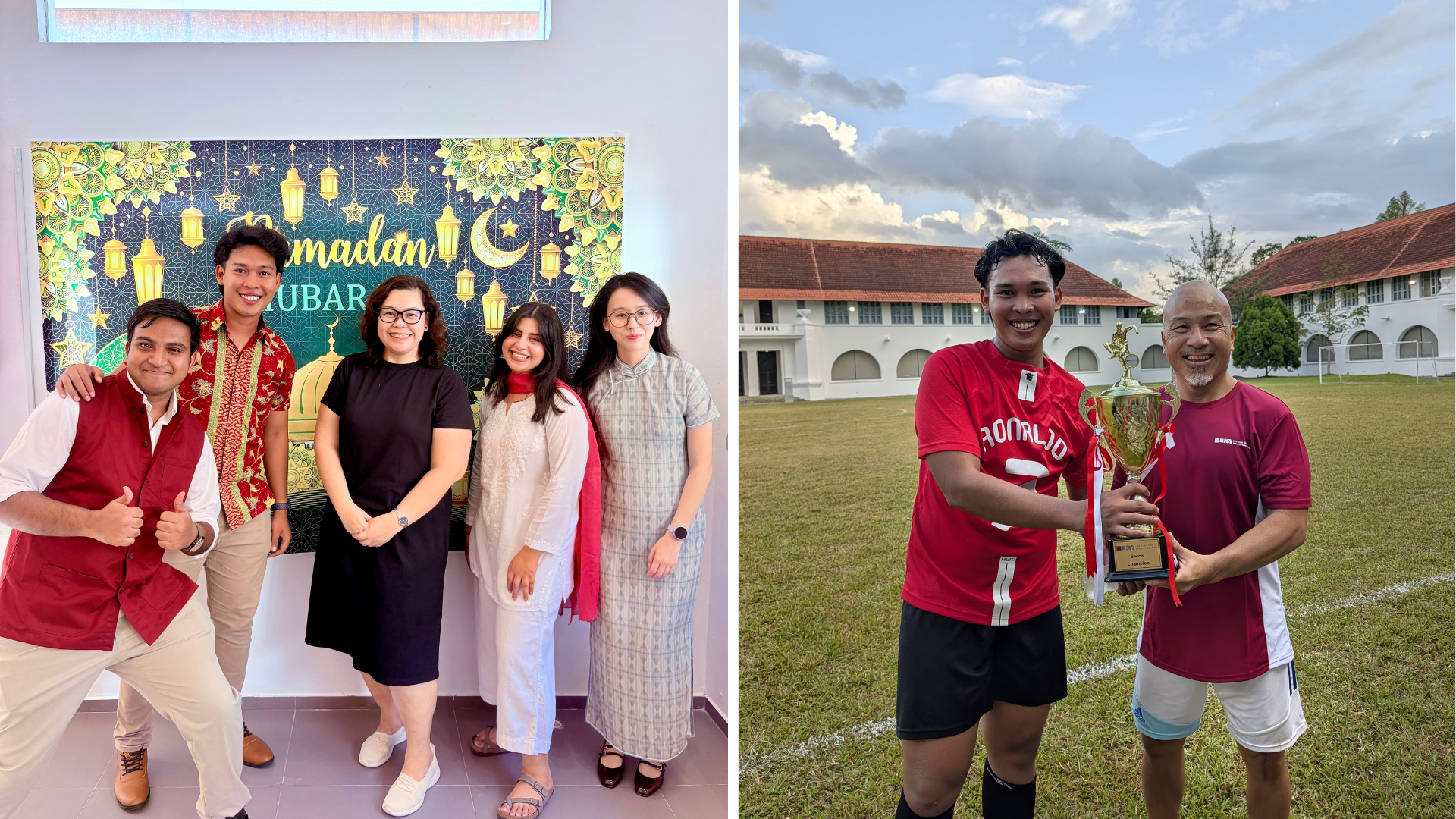
Hafiz, who is considering a career in international development, credits the School with equipping him with useful skills and experiences.
“Through coursework, interaction with diverse classmates, and real-world experiences like the Aceh flood response, I've developed a deeper understanding of how policy, humanitarian action, and development intersect,” he said.
This story is part of NUS News’ coverage of Commencement 2026, celebrating the achievements of our graduates from the Class of 2026. For more, read our stories and graduate profiles, check out the official Commencement website, or look up and tag #NUS2026 on our social media channels!