NUS calls for ASEAN universities to push for “education diplomacy”
Southeast Asia’s future looks promising, with its combined economy exceeding US$4 trillion (S$5.16 trillion) and digital transformation efforts projected to create some 65 million new jobs by 2030. But the gains would count for little if they are not shared, university leaders from across the region said.
“In times of uncertainty and global turbulence, our unity and mutual support are not merely sources of comfort,” said Professor Tan Eng Chye, President of the National University of Singapore (NUS), describing ASEAN higher education as “a beacon of hope, progress, and unity in a rapidly evolving world”.
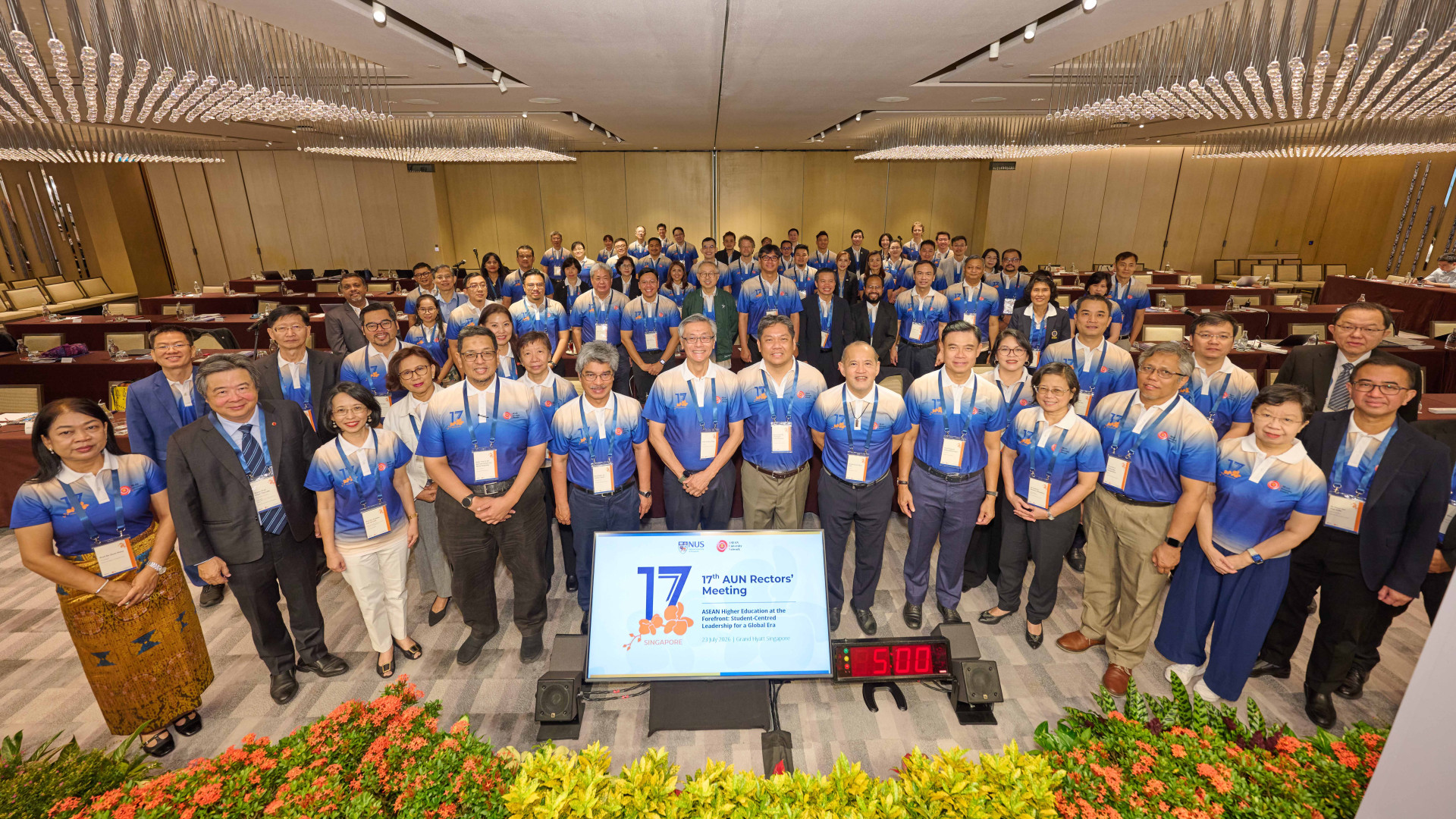
He was speaking at the 17th ASEAN University Network (AUN) Rectors’ Meeting on 23 July, where regional university leaders called for deeper collaboration to address challenges that no single institution can tackle alone. These include unequal access to educational opportunities and technology, intensifying global competition and the growing concerns over student well-being.
“We know that meaningful cooperation does not require uniformity,” Prof Tan said. “In fact, our diversity becomes one of our greatest strengths in a world that increasingly demands coalition-building across differences.”
Hosted by NUS at the Grand Hyatt Singapore under the theme “ASEAN Higher Education at the Forefront: Student-Centred Leadership for a Global Era”, the annual meeting brought together approximately 100 university leaders and delegates from nearly 30 leading universities across ASEAN.
Rethinking ASEAN higher education
Opening the meeting, AUN Executive Director Associate Professor Thanapan Laiprakobsup said the network’s strength lies less in its programmes than in its members, “who continue to spark ideas, initiate important conversations, learn from each other, and even challenge one another”.
In his keynote shortly after, Prof Tan argued that ASEAN’s standing in global higher education would depend not on the achievements of any single university, but on the region’s ability to position itself “as a connected and complementary regional ecosystem” — an approach he described as “education diplomacy”.
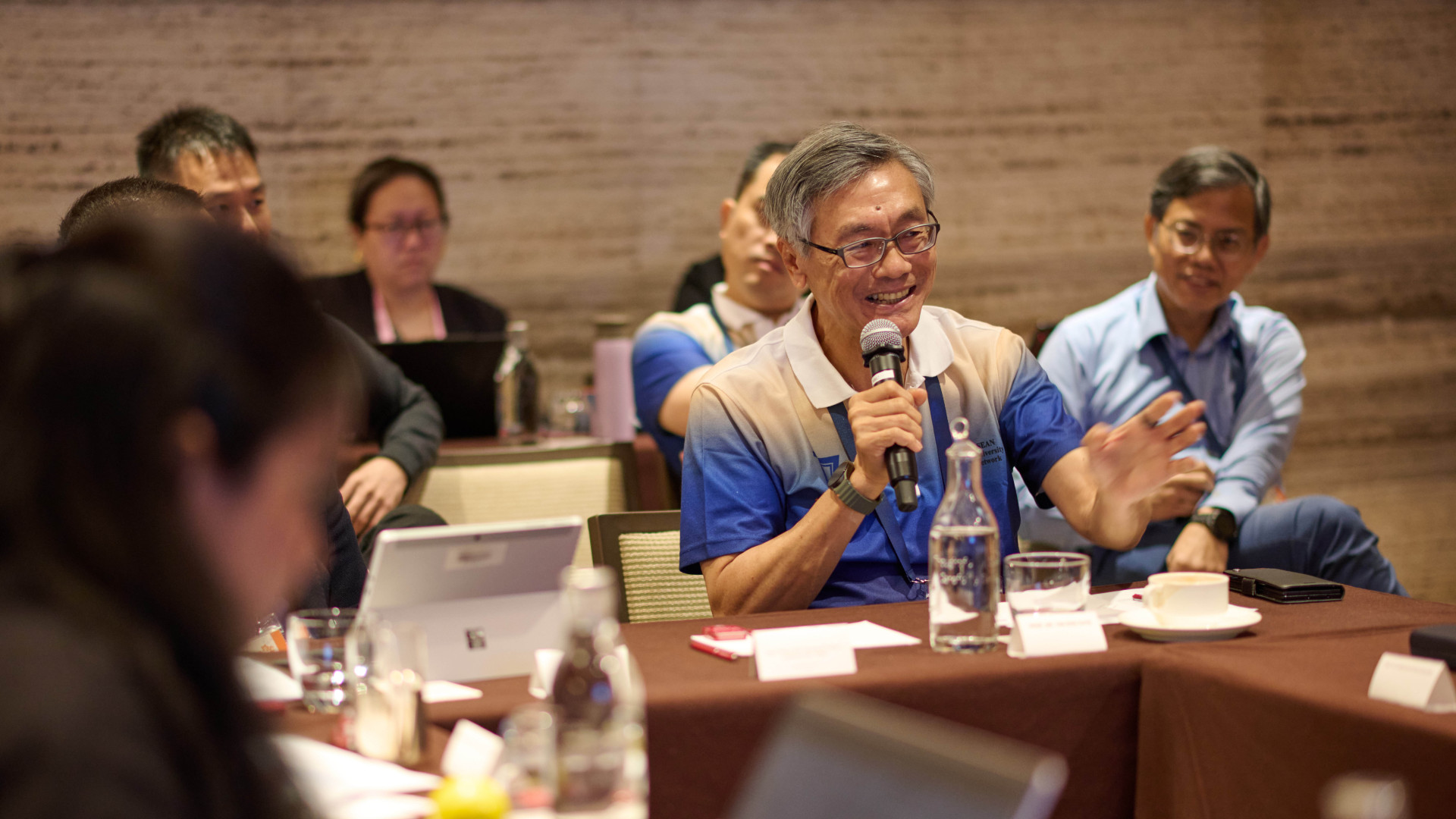
“ASEAN’s global standing should also be measured by whether the world sees the region as a trusted place to learn, to collaborate, and to solve shared challenges,” he said.
Prof Tan cited NUS’ DiscoverNUS programme, tuition-free semester exchange launched in 2024, as an example of education diplomacy in action. The programme has expanded from 31 students in its inaugural year to 141 students from 16 ASEAN partner universities. Its rapid growth reflects the strong commitment among partner universities to regional collaboration and a shared conviction that investing in young people today will cultivate a network of future changemakers who will strengthen the ASEAN community for generations to come.
Prof Tan also underscored the importance of placing students at the heart of ASEAN universities' mission, stressing that institutions have a responsibility to nurture graduates who are not only equipped with knowledge and skills, but are also resilient, grounded in strong values and committed to making meaningful contributions to society.
“If ASEAN higher education is to be truly future-ready, then academic excellence must go hand in hand with access, well-being, inclusion and a strong sense of belonging,” he said.
Two proposals later in the day, in a session titled “Unified Futures”, gave that vision further shape.
A regional solutions hub
The first, by Professor Koh Lian Pin, NUS Vice President (Sustainability and Resilience) and Dean of the Faculty of Science, called for a new Planetary Boundaries Science and Solutions Hub for Southeast Asia.
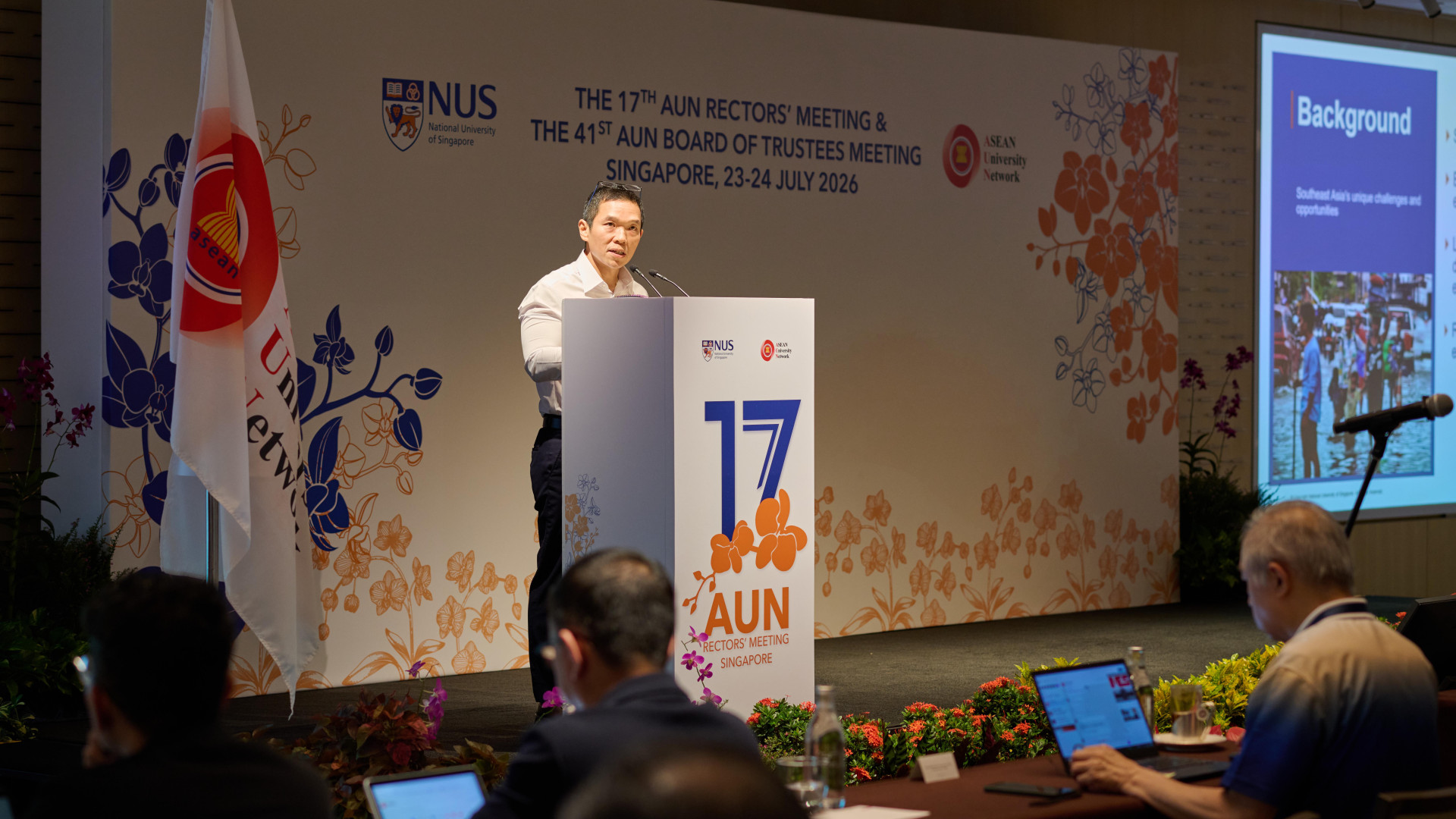
Envisioned as a partnership platform, translational science hub, capacity-building network and policy engagement mechanism, the hub would bring together expertise from across the region to tackle shared sustainability challenges.
Such a hub is urgently needed as Southeast Asia is home to nearly 700 million people and extraordinary biodiversity, but its long coastlines and densely populated river deltas also make it one of the region’s most vulnerable to climate change.
“We need solutions designed by Southeast Asia for Southeast Asia,” Prof Koh said, arguing that approaches developed elsewhere cannot simply be transplanted to the region.
The proposed hub would focus on five priorities — climate resilience, biosphere integrity, water resource management, food security and public health — with success measured not only by research output, but also by policy impact and tangible societal outcomes. Currently at the conceptual stage, the proposal is an open invitation for AUN member universities to help shape its development.
“Southeast Asia is vulnerable but not helpless,” Prof Koh added.
Music as a bridge across borders
The second proposal extended the day’s theme of collaboration to the arts. Associate Professor Chan Tze Law, Vice Dean of the Yong Siew Toh Conservatory of Music at NUS, proposed establishing an ASEAN Varsity Orchestra under the AUN umbrella.
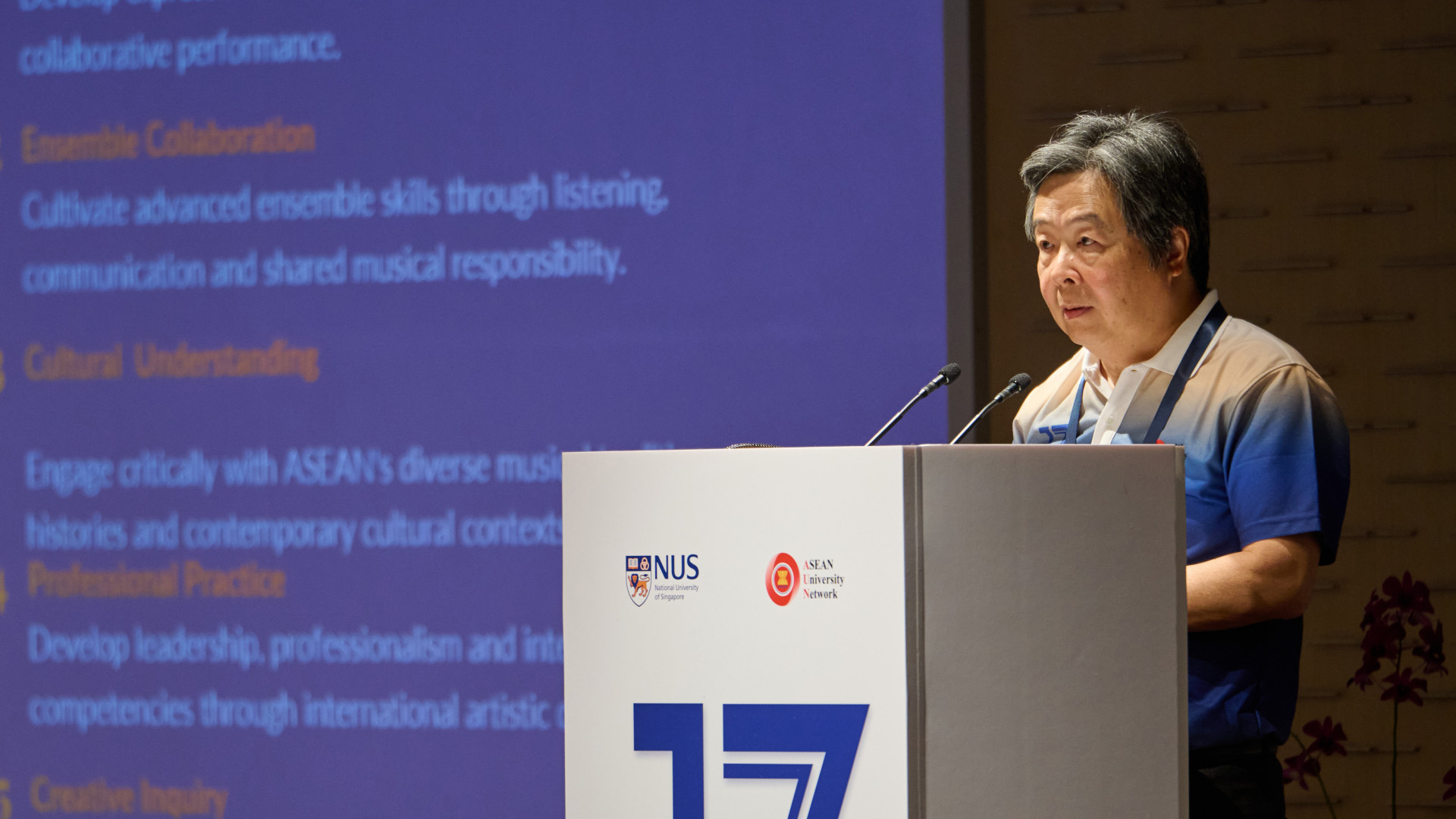
“When students from different nations learn music together, they are doing far more than just preparing for a concert,” he said.
Drawing on successful regional initiatives, such as the Asian Youth Orchestra and the Southeast Asia Youth Orchestra and Wind Ensemble, Assoc Prof Chan said music exchanges foster empathy, mutual understanding and trust that endure long after the final performance.
The proposed seven-day programme, open to students from all disciplines, would combine rehearsals and performances with seminars, cultural immersion and structured reflection.
NUS has offered to host the inaugural edition in May 2027 and is inviting every AUN member university to nominate students and a faculty representative to participate.
A shared agenda for ASEAN
The meeting’s emphasis on partnership was further reflected in the launch of the ASEAN University Network Thematic Network for Geriatric Dentistry (AUN-GDENT), established on the sidelines of this year’s AUN meetings.
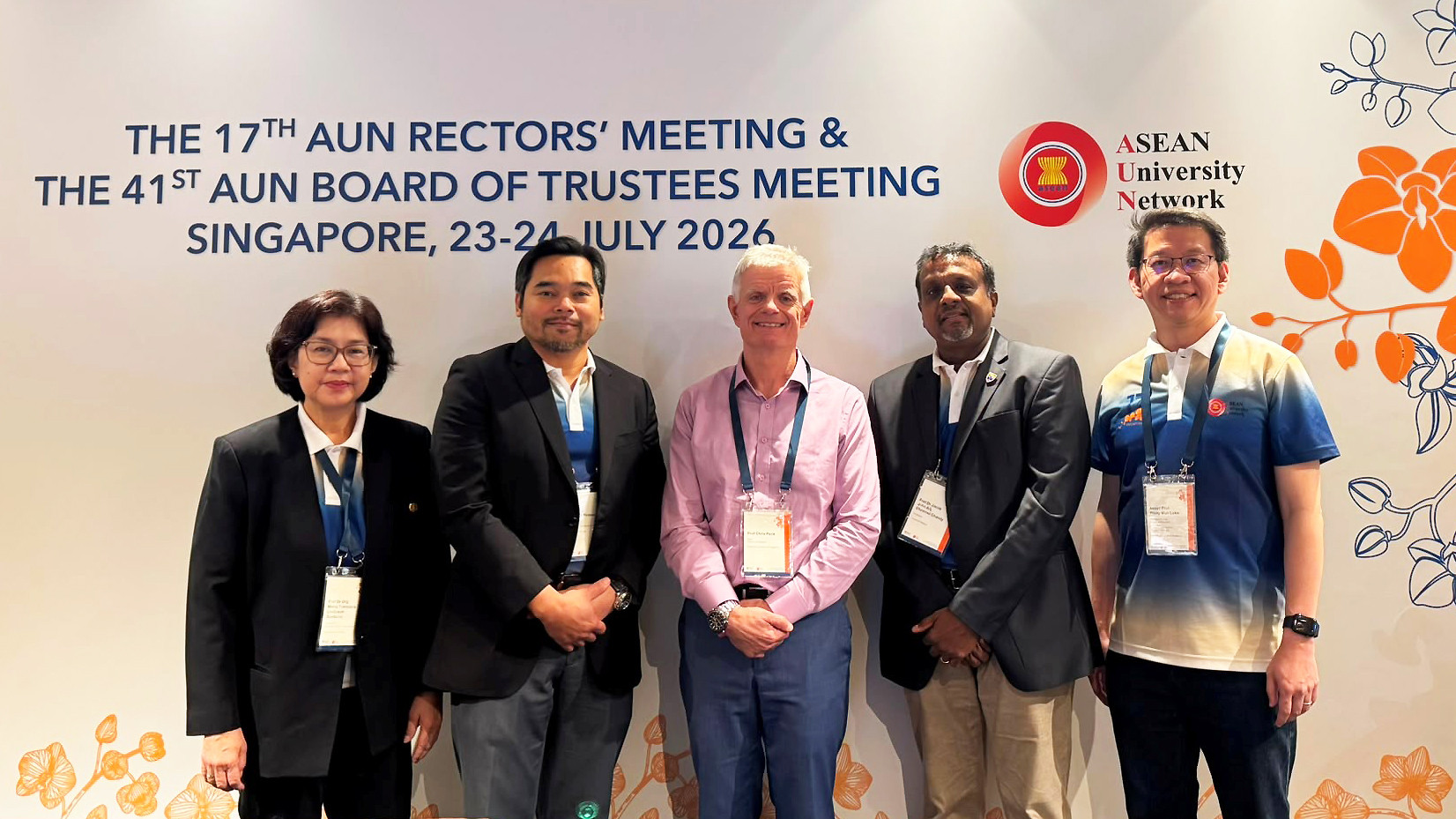
Anchored by a five-year strategic plan, AUN-GDENT aims to advance interprofessional education and strengthen capacity in collaborative oral healthcare for older adults across the ASEAN healthcare ecosystem through joint education, research and capacity-building initiatives.
Its founding institutions — Universiti Malaya, National University of Singapore, Universitas Indonesia and Khon Kaen University — will also engage other AUN member universities and a broad range of healthcare and community stakeholders in advancing the shared vision of promoting healthy ageing through healthy smiles.
As Prof Tan concluded in his keynote, the future of ASEAN higher education will not be secured by any one institution acting alone. Instead, it will be shaped through trusted partnerships, greater student mobility, deeper research collaboration, stronger connections between universities and society, and the courage to transform institutions for the needs of the next generation.
“ASEAN will not simply participate in the future of global higher education,” he said. “In fact, we help to define it.”