More than a bootcamp, NUS Entrepreneurship Programme transformed perspectives
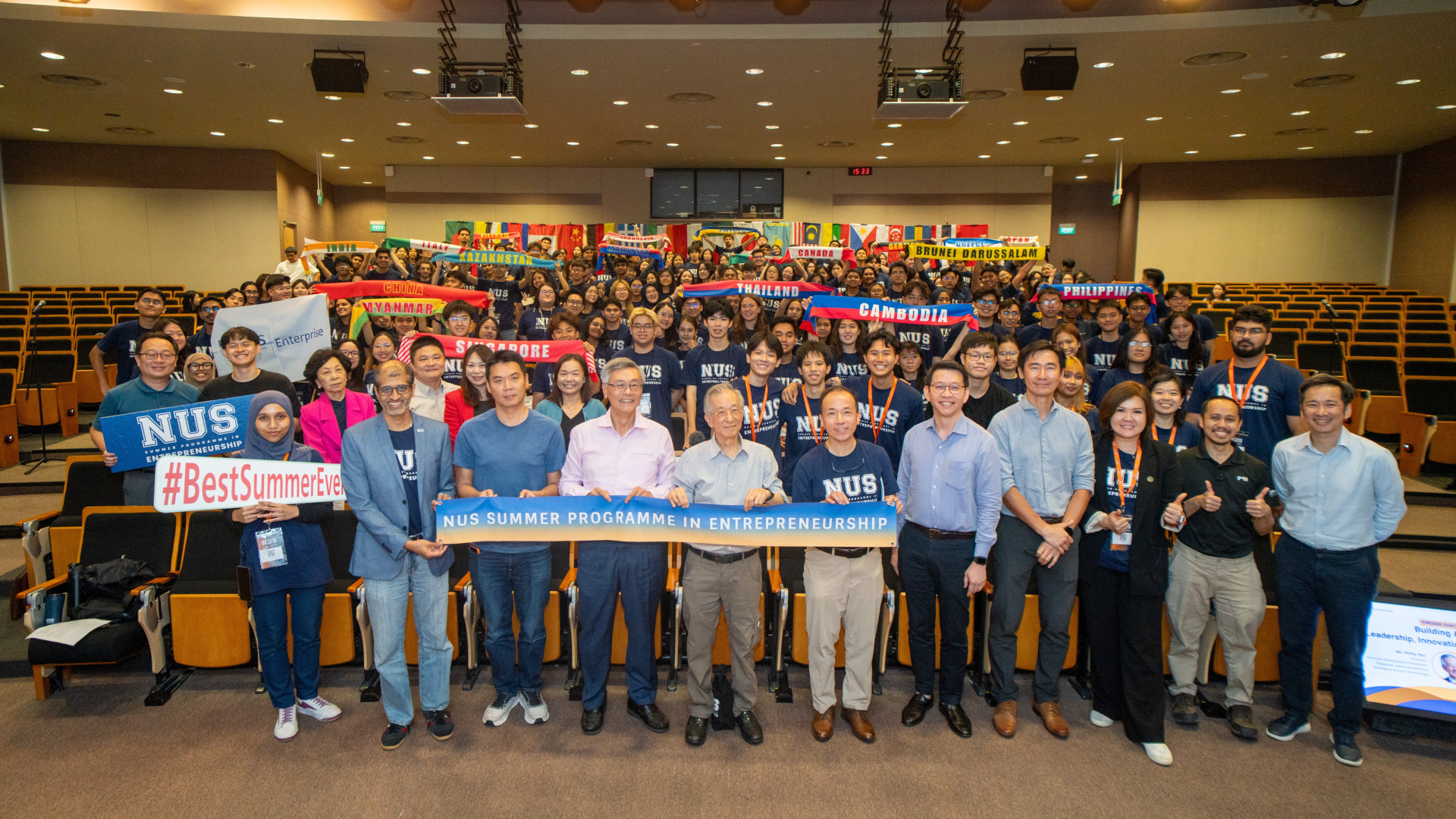
For more than two decades, the NUS Enterprise Summer Programme in Entrepreneurship (NUSSP) has been a platform for aspiring entrepreneurs from around the world to develop the mindset, skills and networks needed to turn ideas into impact. This year, 200 students from 20 countries and 55 universities continued that legacy in an intensive two-week journey that enabled the exchange of perspectives, cultures and ideas.
At the heart of the programme was the opportunity for participants to apply entrepreneurial thinking to real-world challenges. Through corporate-led problem statements, they leveraged AI-driven approaches to develop innovative, impact-driven solutions.
The 2026 edition also marked the launch of the NUS-ASEAN SPARK Fellowship, a new initiative designed to support the region's most promising young entrepreneurial talents and inspire the next generation of leaders.
A new lens on entrepreneurship
After a long journey and multiple layovers, Dina Kalibekova, a Year 4 Mathematics student from Nazarbayev University, touched down in Singapore with quiet excitement. Beyond just a programme, she found an experience that fundamentally shifted her perspective on entrepreneurship and her own path forward.
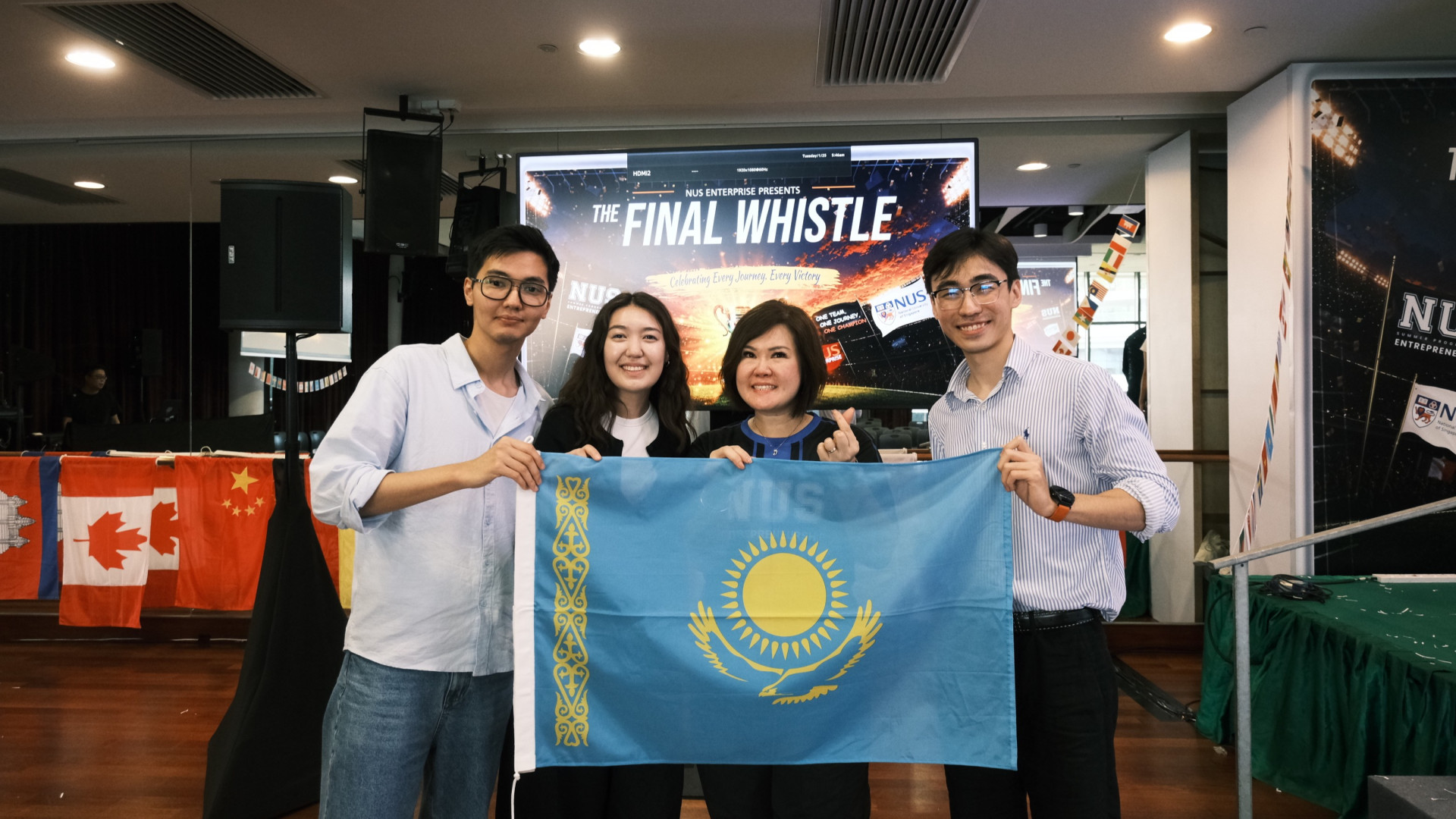
With a math background and product management experience, she previously viewed product development through a purely technical lens. However, NUSSP taught her that success is not about creating the “perfect product”, but one that solves real user needs. By combining an entrepreneurial mindset with her technical skills, she learned to build not just what works, but what matters.
Meanwhile, serving as a student ambassador for the programme reshaped how Anson Ng, a Year 1 NUS Computer Science student, viewed entrepreneurship. No matter how grand a breakthrough idea was, it eventually took a backseat to a deeper appreciation for everyday businesses that quietly solve real problems.
A particular remark from Mr Dennis Chua of Timah Partners stuck with him: “Unsexy businesses are great businesses”. That insight reframed his view of opportunity, proving that overlooked industries often create the most value.
Learning from the architects of innovation and impact
NUSSP connected participants with visionary leaders and unicorn founders, including Mr Jeffrey Tiong, Founder and CEO of PatSnap, and Mr. Philip Yeo, former Chairman of Singapore’s Economic Development Board. Through curated fireside chats, attendees gained firsthand insights into the realities of building enduring ventures, navigating uncertainty and growing innovation ecosystems.
Drawing from his own entrepreneurial journey, Jeffrey shared a simple yet powerful Chinese proverb: “Reading ten thousand books is not as valuable as travelling ten thousand miles”. The wisdom captured the value of experiential learning — that meaningful innovation comes not only from knowledge, but from exposure, exploration and real-world encounters.
Integrating AI into the entrepreneurial journey
Throughout NUSSP, AI was viewed as more than a tool — it became a mindset that shaped how participants identified opportunities, solved problems and created impact. This approach came to life through interactive learning journeys, AI-focused workshops and panel discussions on future tech.
At ShopBack, Anson reflected on the opportunity to engage with NUS Overseas Colleges (NOC) alumnus and ShopBack co-founder Mr Joel Leong, “What struck me most was how confidently and openly they embraced AI, treating it as a tool that everyone in the company could use to prototype and iterate, rather than something to be feared. I left that session with a clear and energised sense of how I hope to build in the future.”
This was echoed by Dina, who was inspired by how AI had become part of ShopBack’s everyday culture. “What stayed with me most was their habit of meeting biweekly just to share AI use cases — open to everyone, no tech background needed. I have already brought this practice to my own team.”
At Alibaba Cloud, Joshua Jovano Sibarani, a final-year Industrial Engineering student from the Bandung Institute of Technology (ITB), explored AI technologies like Qwen, learning how intelligent systems can drive entrepreneurship.
During his visit to AI tech services company NCS, he saw this vision in action through Sunshine.coder, an internal tool designed for human-AI collaboration. “I was particularly inspired by how AI agents handle repetitive tasks, while NCS professionals provide direction and apply business judgement,” he said.
Innovation with purpose
Beyond technology and venture creation, participants explored another — arguably more important — dimension of innovation: its ability to create meaningful societal impact.
On top of a panel discussion on purpose-driven leadership, participants visited social enterprises such as Dignity Kitchen and Social Collider, where they saw how startups addressed real-world challenges, including projects that advanced corporate sustainability and empowered people with disabilities.
Meeting founders and witnessing the impact of their work reinforced a powerful lesson: innovation is not just about new ideas, but also creating solutions that truly matter.
Global voices, one shared vision
Collaboration came alive during the innovation challenge as participants used their varied backgrounds to solve real-world problems. Partnering with teammates from Malaysia, Cambodia and Vietnam, Joshua saw firsthand how diversity elevates ideation.
“We all had different ways of communicating and approaching problems. But as we developed CashBuddy, an AI-powered financial accountability app, those differences became our greatest advantage. Every discussion challenged our assumptions, and every perspective made our solution stronger,” he said.

Similarly, Anson and his project team, Team SMEily, discovered that diversity was their greatest strength. For Anson, the highlight of the journey was not the final idea, but the bonds forged through late-night rehearsals and honest discussions. These shared efforts transformed a group of strangers into a close-knit team.
At Demo Day, their hard work paid off when they won the Best Pitch Team award for both their track and the corporate problem statement challenge, underscoring the power of collaboration.

One rhythm, one goal
The bottom line: behind every impactful innovation are people who come together with a shared purpose.
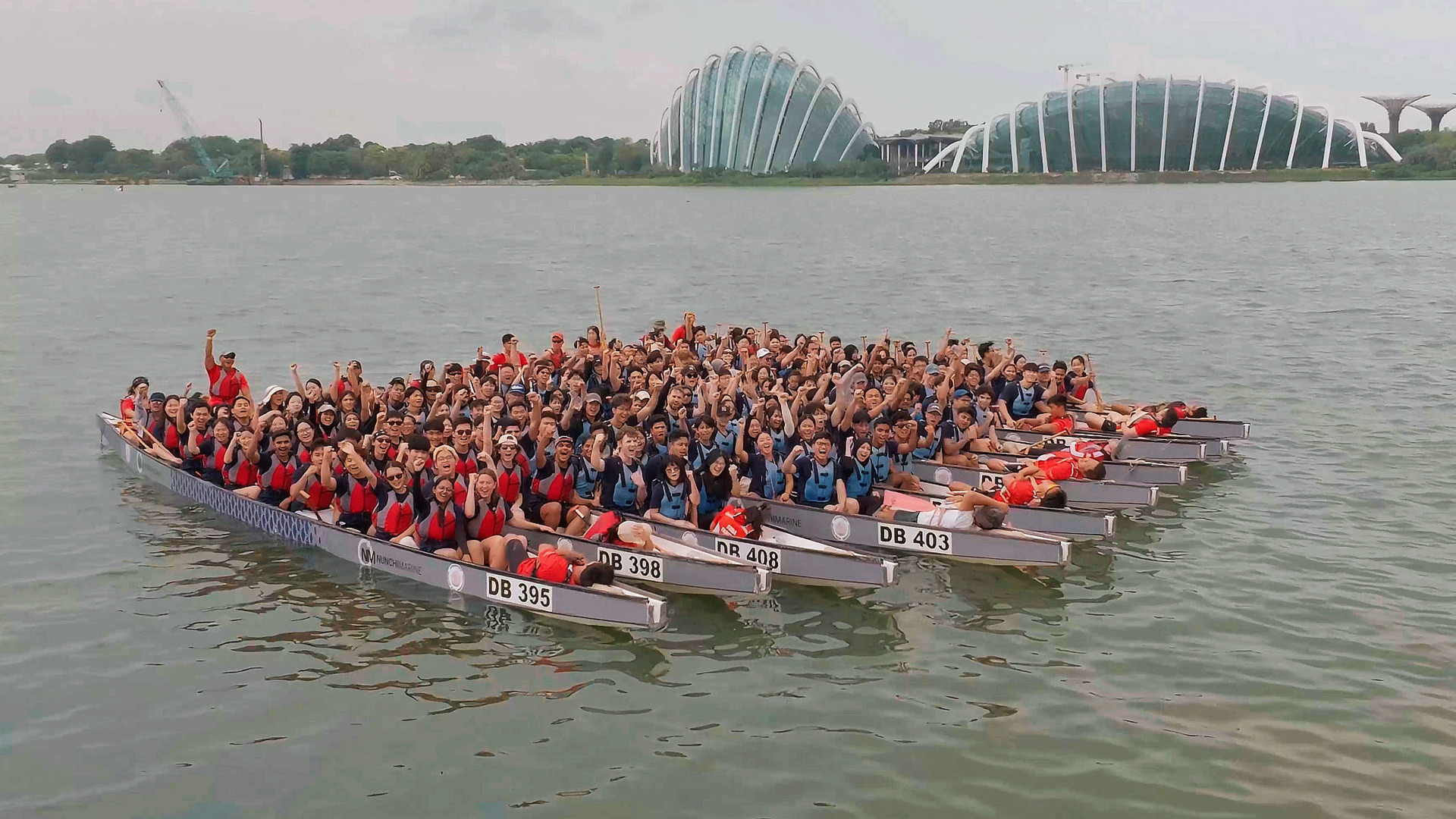
The focus on collaboration extended beyond the classroom, as participants discovered during a dragon boating activity on the Kallang River. Working together across cultures and backgrounds, they experienced firsthand that success relies on trust, coordination and a collective vision, rather than simply individual strength.
By NUS Enterprise