Reinventing paediatric dental training at NUS
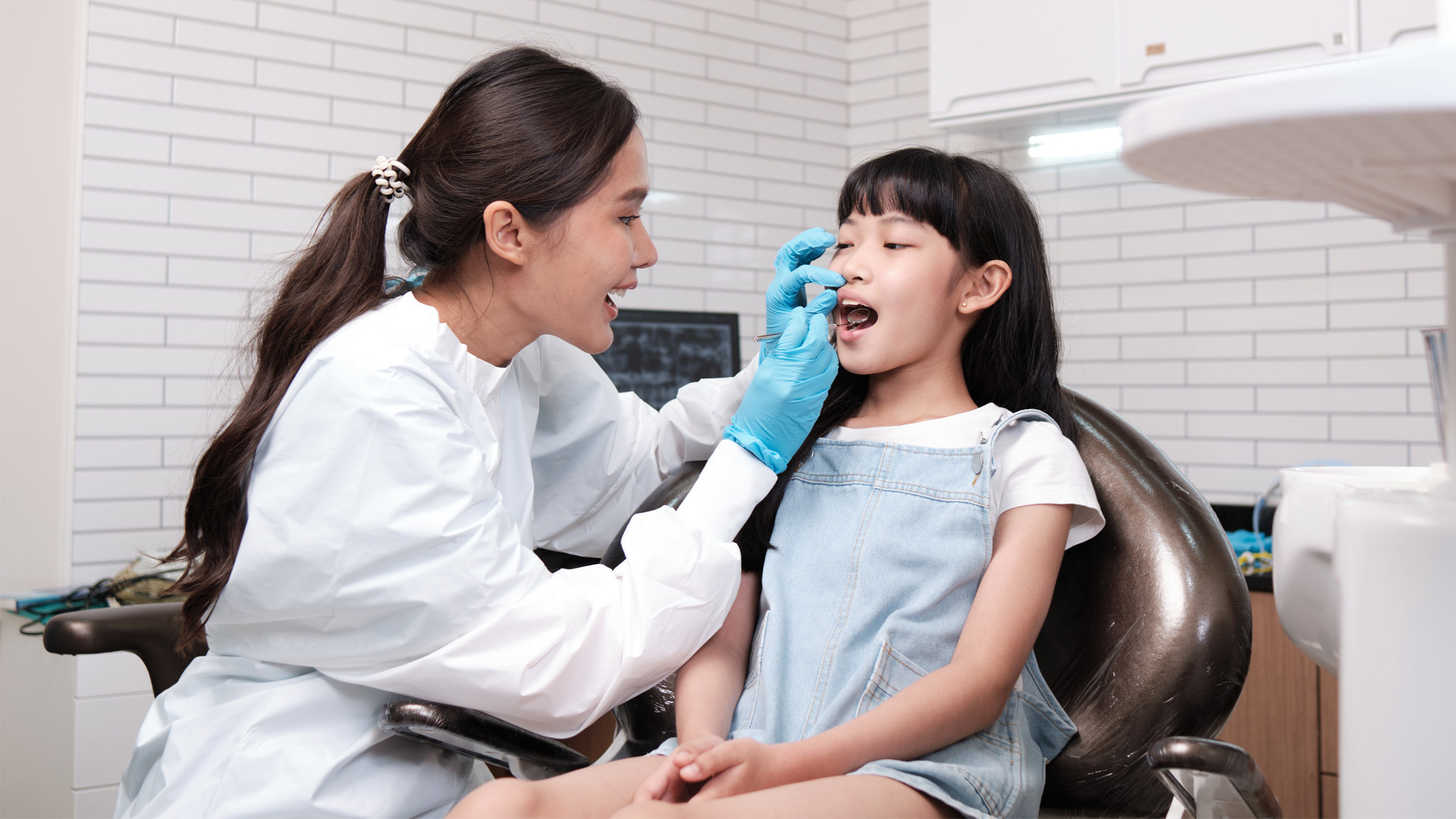
Managing pediatric dental patients can be stressful for dental students and inexperienced practitioners, particularly when communicating with fearful and uncooperative children. Previous studies had found that dental students experience three times the stress levels when compared to seasoned specialists.
Delivering effective behaviour guidance in clinical settings demands confidence, strong communication skills, and the ability to adapt in real time — qualities typically developed through personalised faculty feedback during live sessions. Now, educators at the National University of Singapore (NUS) Faculty of Dentistry have identified a promising approach to enhance the efficiency and scalability of this training process.
In a recent study published in the scientific journal, JMIR Medical Education, Dr Ishreen Kaur, Dr Gabriel Lee, and Associate Professor Hu Shijia demonstrated that dental students’ skills in handling children’s behaviour can be accurately assessed using only text transcripts. Their findings revealed that transcript-based evaluations produced results comparable to those obtained from full video-recorded clinical session assessments.
These findings could significantly reduce the time and manpower required for clinical teaching, especially in settings where faculty resources are stretched. Instead of reviewing lengthy videos, educators may be able to assess student performance more quickly through transcripts, while still delivering meaningful personalised feedback.
Assoc Prof Hu said, “These findings allow us to enhance training for our dental students by providing more personalised and insightful feedback on their interactions with young patients. With a better understanding of each student’s needs, we can better tailor our training to help them grow into more confident and effective dentists, ultimately providing better care for young patients.”
If proven effective, this method could potentially be adapted to other disciplines to enhance patient communication and applied in broader healthcare contexts, such as nursing and medicine, to improve the management of child patients.
The study also highlights the future potential of integrating artificial intelligence (AI) in dental education. Because transcript-based evaluations can be processed digitally, the approach opens the door for AI-powered large language models (LLMs) to assist in analysing student interactions and generating feedback.
In the long term, the NUS Dentistry team envisions the development of a “virtual mentor” system that could support clinical training, helping dental students build confidence and communication skills in paediatric care while enabling teaching faculty to focus on higher-level mentorship and more personalised guidance. To this end, the research team has also received a Ministry of Education Tertiary Education Research Fund grant to carry out a follow-up study to assess the effectiveness of using AI to provide feedback to dental students on their behaviour management skills during actual clinical sessions.